

Pascal, Austin, Kelsen, Hart, Haraway, Haack, and Priest added; Nietzsche, Heidegger, Rorty, Harding, and Others Updated
This is the first content update summary post after nearly two years because 2025 was one of the toughest years of my life. I continued to read and work on the project (at a slower pace) but couldn’t find the energy to write a post here. (Yes, I still read and generate texts using only the not-so-large language models running in my skull.) I’m much better now, so here’s what’s new:
- I’ve added Blaise Pascal, John Austin, Hans Kelsen, HLA Hart, Donna Haraway, Susan Haack, and Graham Priest.
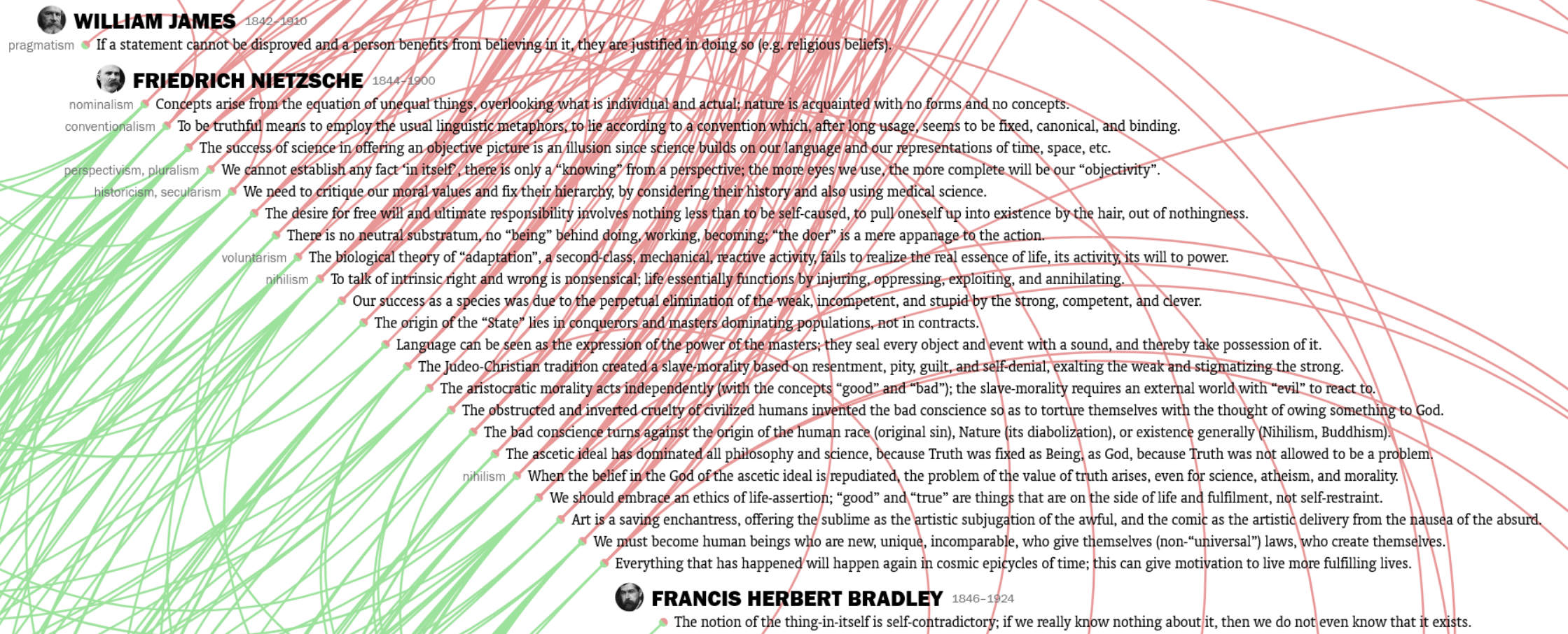
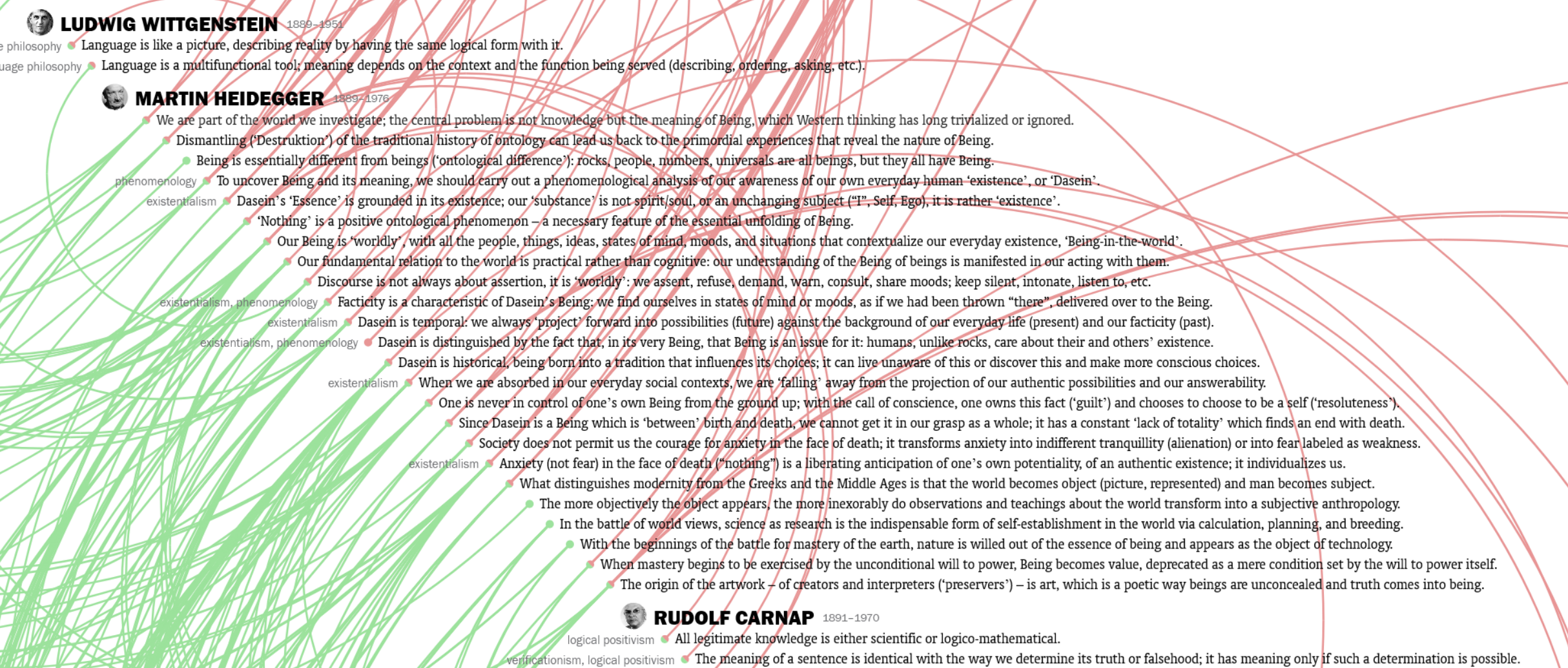
- I’ve made substantive revisions with lots of new/edited sentences for Friedrich Nietzsche (15), Martin Heidegger (21), Richard Rorty (7), and Sandra Harding (8).
- I’ve added/edited sentences for Aristotle, Epicurus, Plotinus, Saint Augustine, Thomas Aquinas (2), Benedict Spinoza (3), David Hume, Immanuel Kant, Jeremy Bentham, Johann Gottlieb Fichte (4), Friedrich Schelling, Georg Wilhelm Friedrich Hegel, John Stuart Mill, Karl Marx (4), Charles Sanders Peirce, Gottlob Frege, John Dewey, Karl Popper, Gilbert Ryle (5), Nelson Goodman, Willard Van Orman Quine, Peter Geach, Philippa Foot, John Rawls (3), Harry Frankfurt (4), Bernard Williams (2), Thomas Nagel, Robert Nozick, David Lewis (4), Tim Scanlon (2), Francisco Varela (3), Peter Singer, and David Chalmers (4).
- I’ve drawn 1291 new connections, making a total of 8732 (5185 positive, 3547 negative) connections between 2140 sentences from 189 philosophers.
Highlights
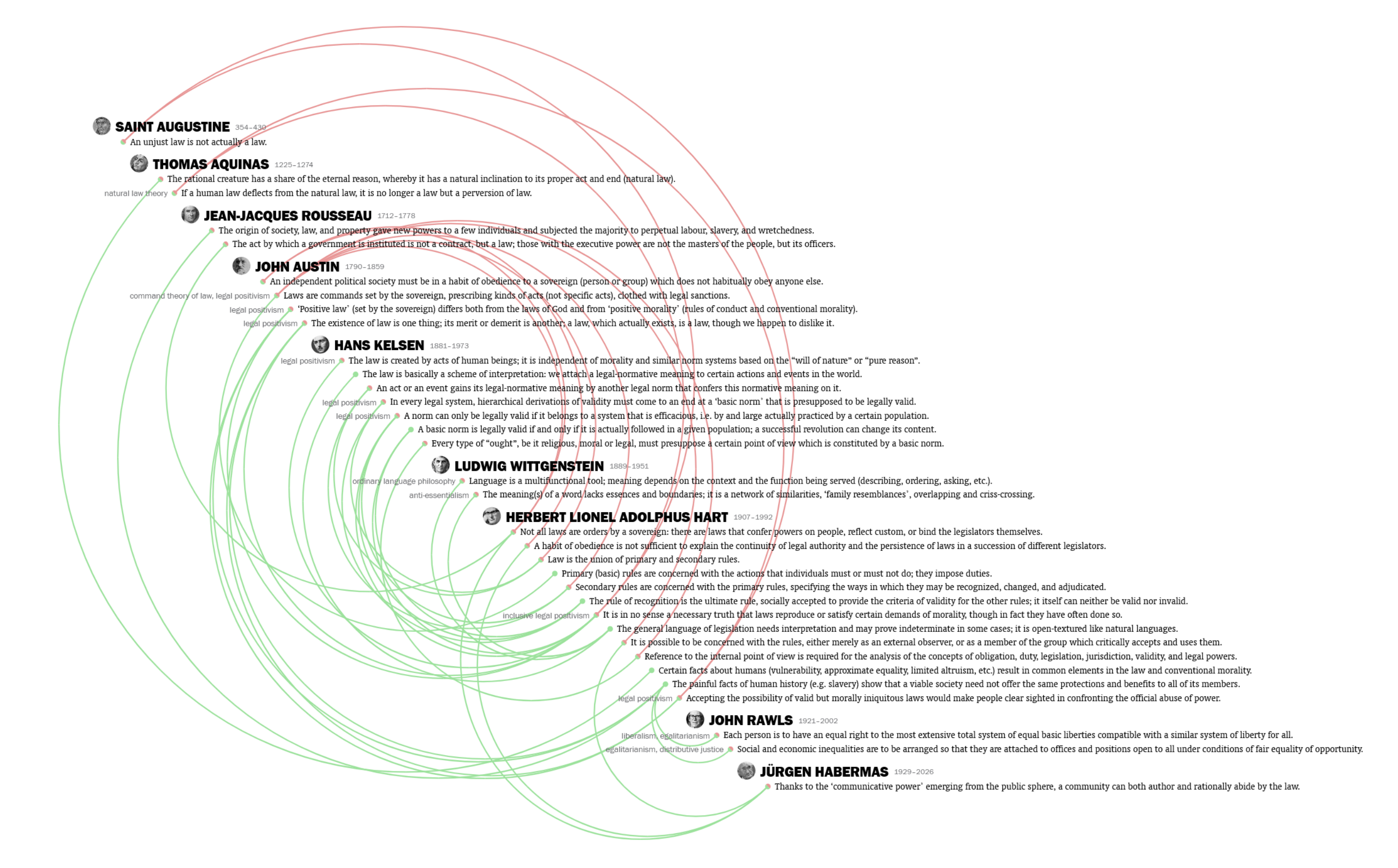
I read some history of philosophy of law and added positivists like John Austin, Hans Kelsen, and HLA Hart, along with sentences on natural law by Augustine and Aquinas, as a start. I plan to work on others including Fuller, Finnis, Dworkin, and Raz.
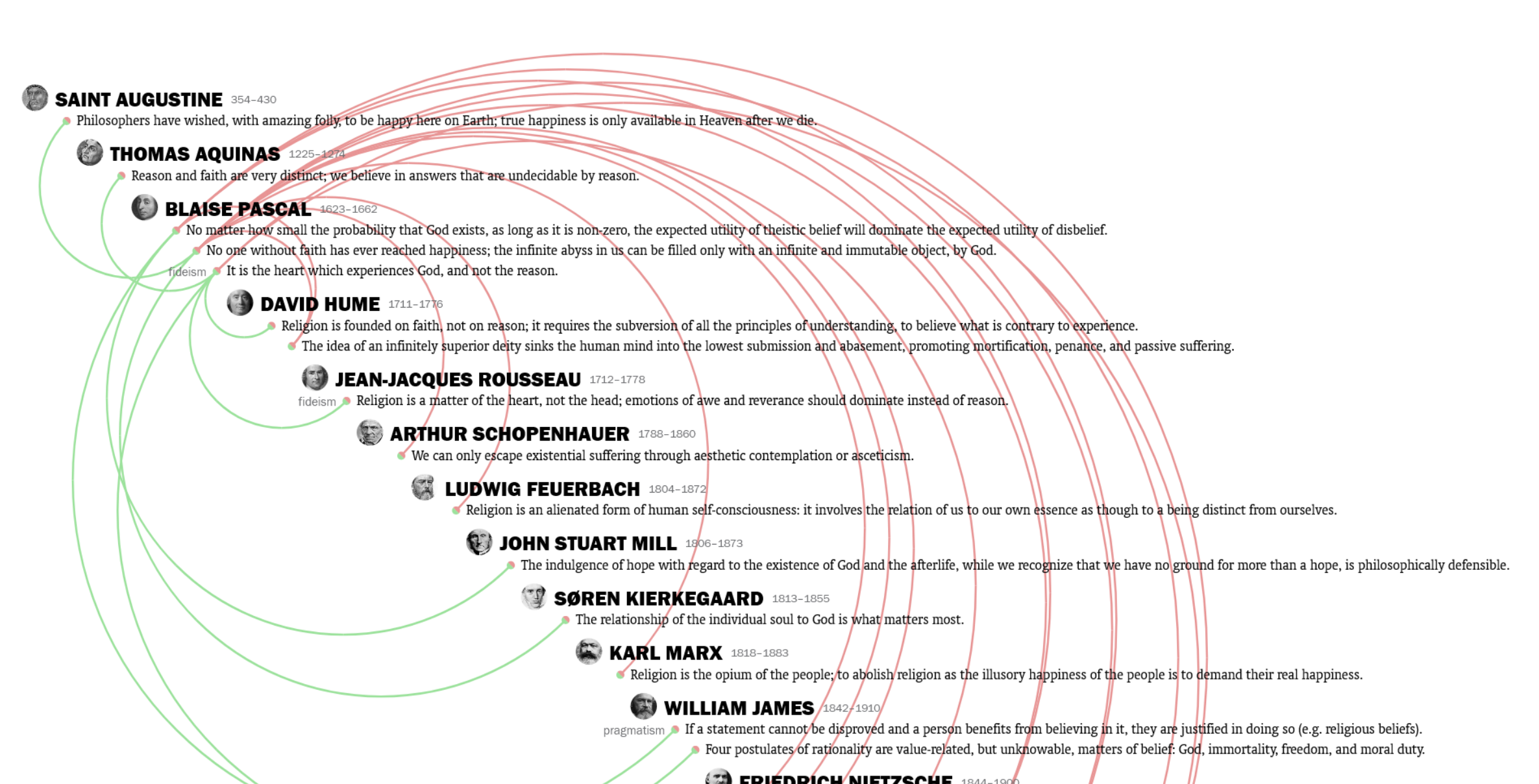
I realized that I didn’t have much content regarding pragmatic arguments for religious faith, so I added a first version of Blaise Pascal and some related ideas by Hume and Mill.
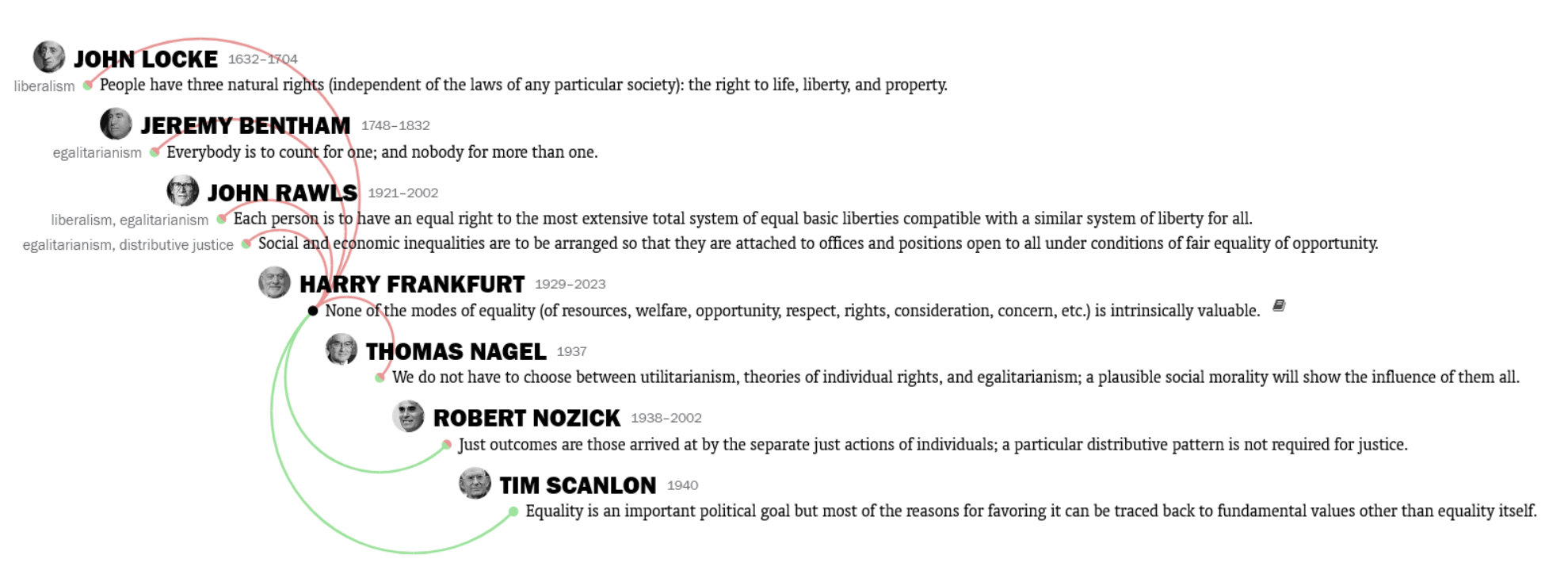
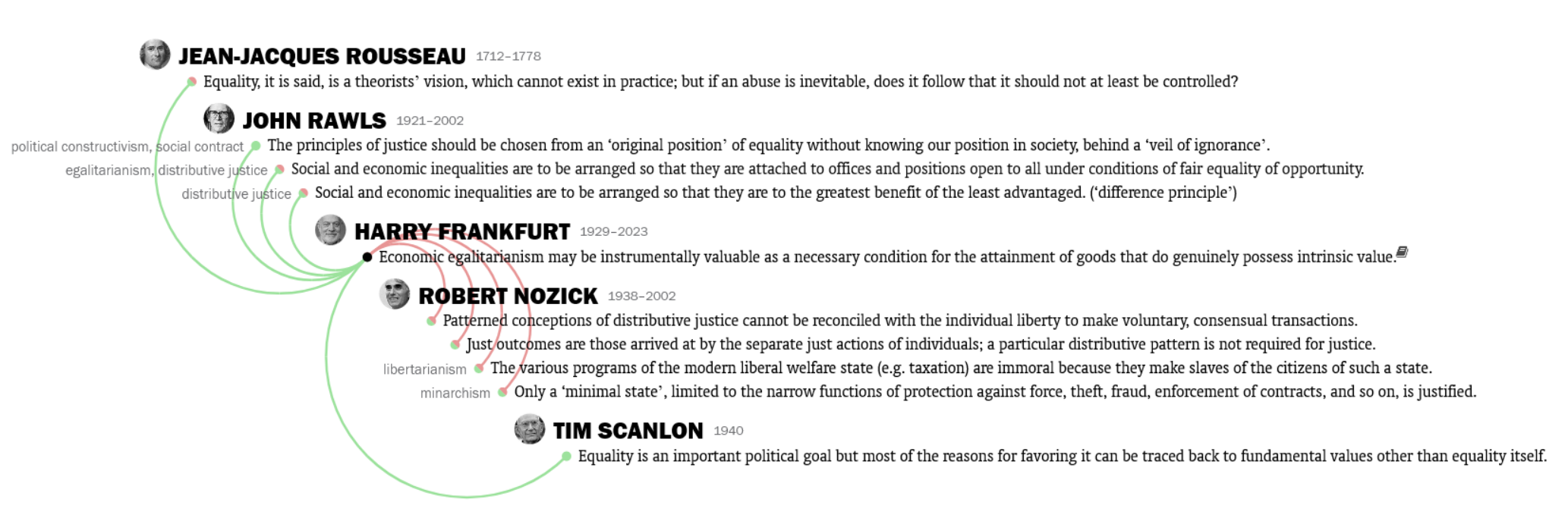
I added many sentences and connections related to inequality after reading Harry Frankfurt’s “On Inequality” and Tim Scanlon’s “The Diversity of Objections to Inequality”.
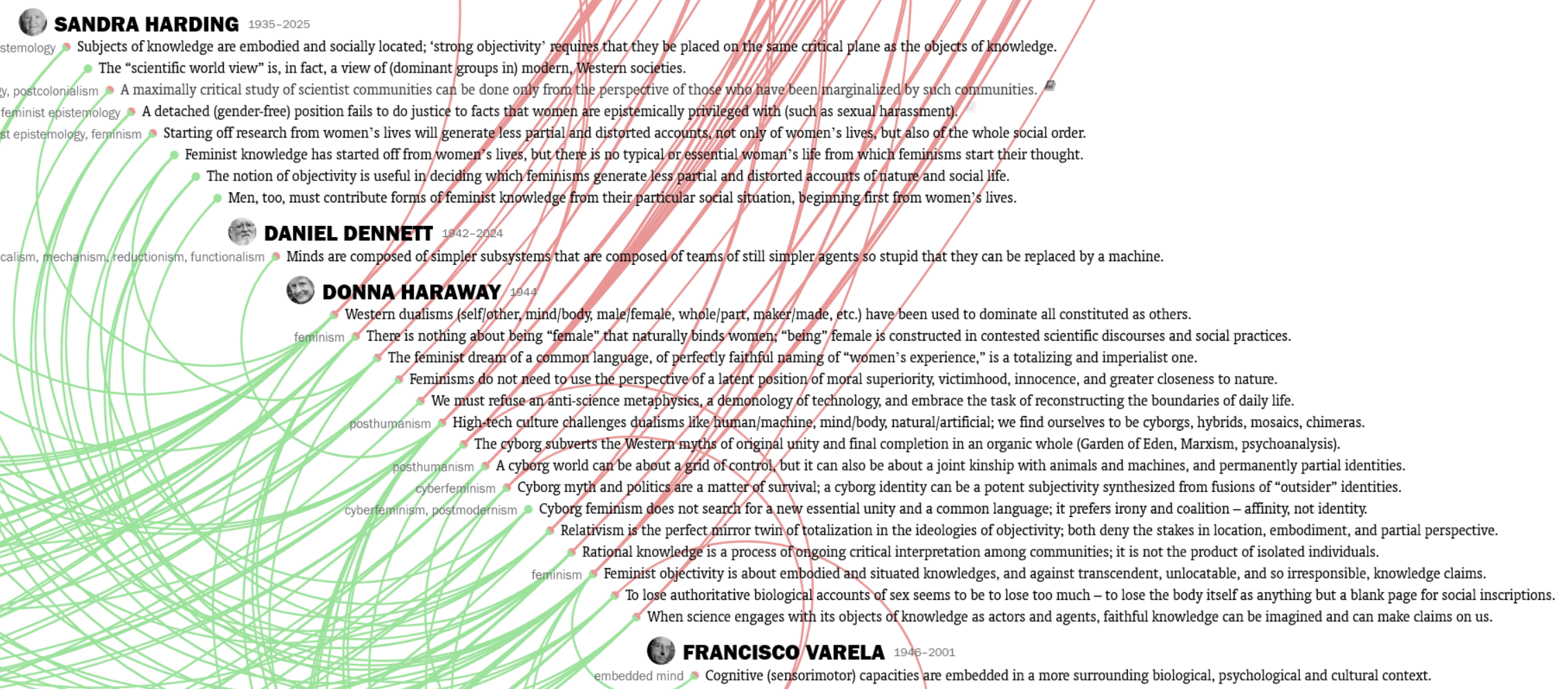
Adding Donna Haraway also led to many updates on Sandra Harding who passed in March 2025.
When Susan Haack passed in March 2026, I took time to read some of her work and add her. Her 2020 memoir “Not One of the Boys: Memoir of an Academic Misfit” where she outlines her career and ideas was a nice guide for me.
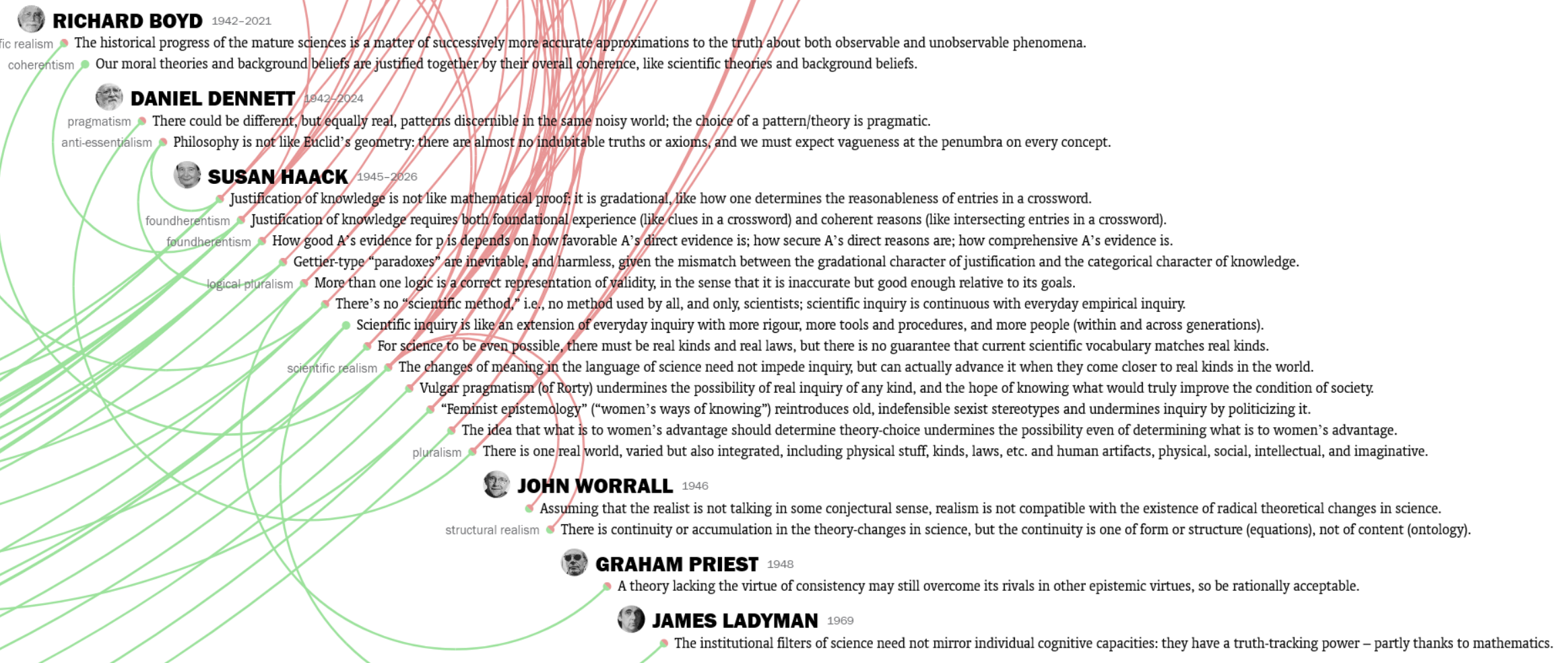
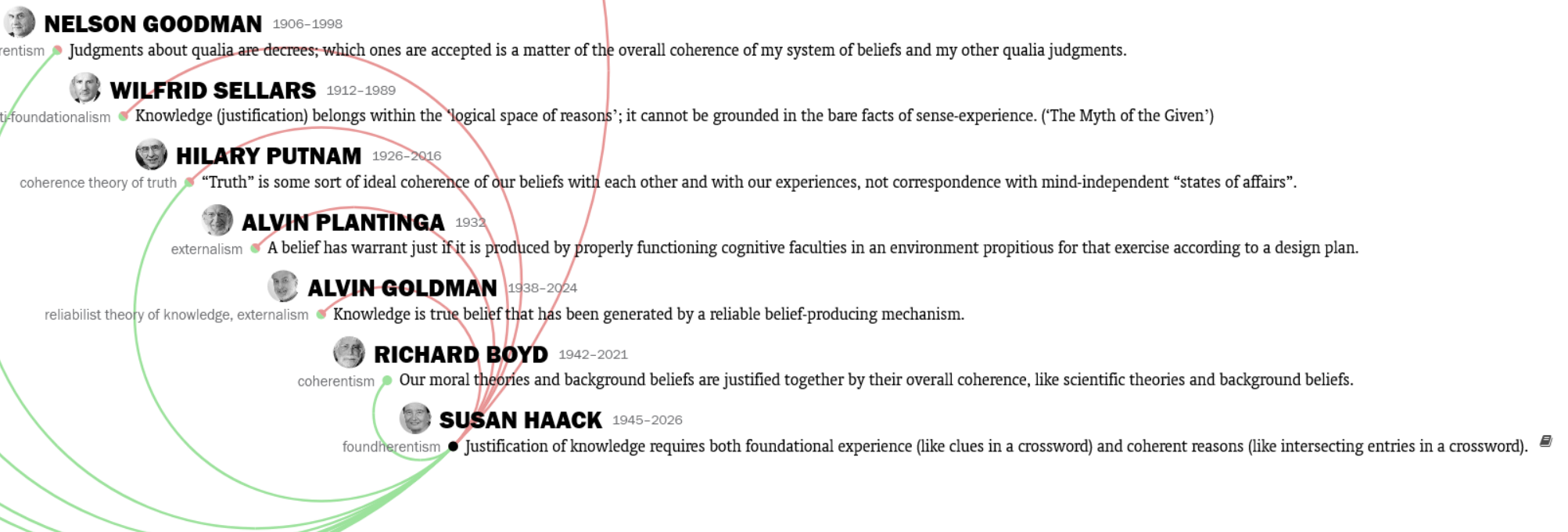
When I read her memoir, I empathized with the outsider position and found some of her jabs funny, but it felt too bitter overall. Her targets include Ladyman, Ross, Rosenberg, Harding, Dennett, and:
One of those young men, by the way, was Graham Priest, whom I taught logic from the propositional calculus through Gödel’s theorem—though I’m glad to say that it was not I, but Richard Routley, who was responsible for his later diversion into soi-disant “dialethic logic.”
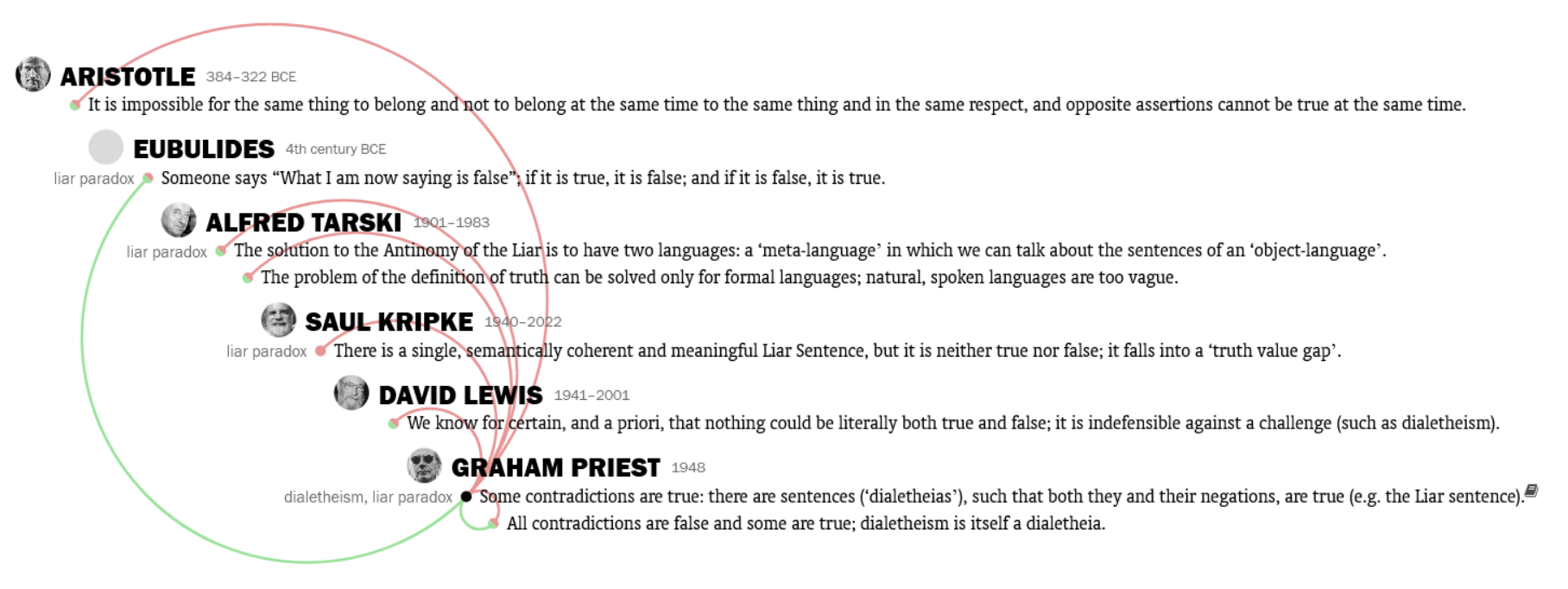
Well, Graham Priest is one of those philosophers whose attitude and humor I adore, so adding him in this update was a pleasure. (He responded “You have me right” when I emailed him to show my summary, so it’s verified!)
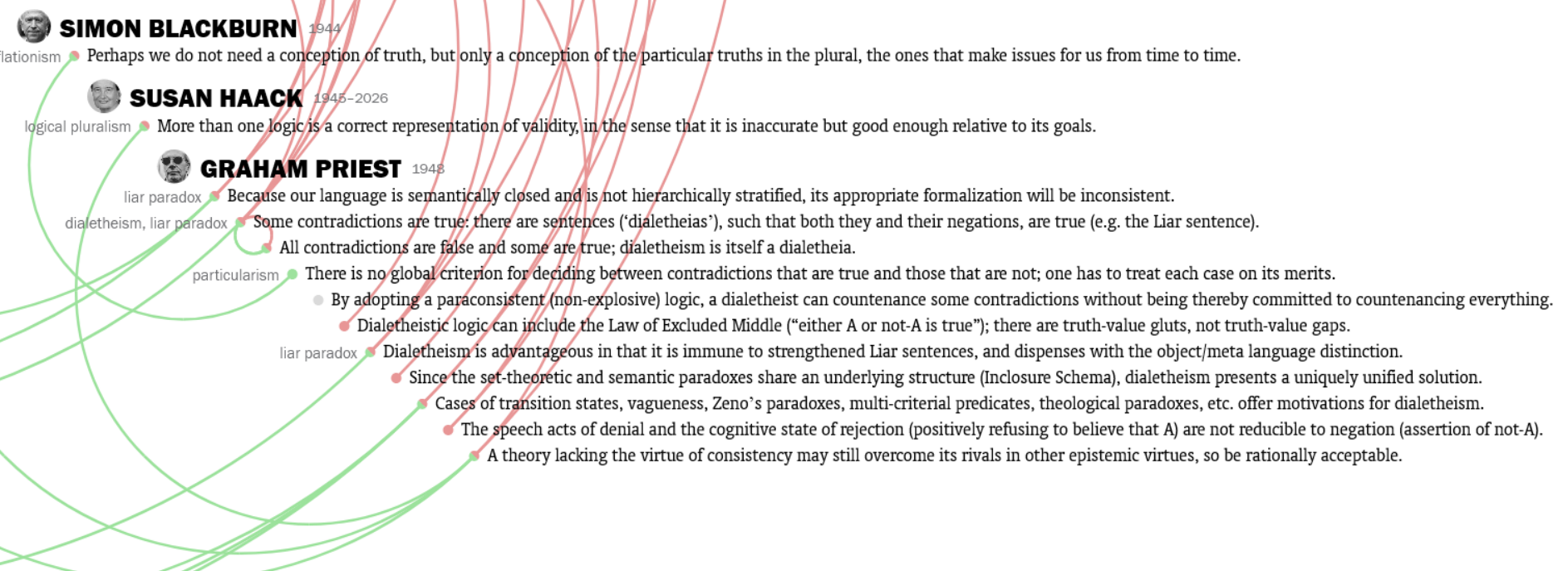
I normally add only negative connections between sentences belonging to the same philosopher, for those specific cases where they change their mind about a subject, have different periods (e.g. Wittgenstein), etc. Priest has a unique feature in this regard: a positive-negative self-connection, because “dialetheism is itself a dialetheia”. Logic is fun!
I’m glad I also spent time on Nietzsche (Genealogy of Morals) and Heidegger (Being and Time; Off the Beaten Track) and arrived at more satisfactory summaries. (I’m grateful to Jeff Yoshimi who generously shared his lecture notes on Heidegger with me.)
Working on major figures like these is a continual process for me; I have extensive updates for Plato, Aristotle, and Kant in the pipeline. And Richard Swinburne, Paul Draper, G.A. Cohen, and Guy Debord are at the top of my to-add list right now.
The usual reminder: You can browse the whole thing here.